Reel Stacker Manufacturer in Ahmedabad | Easy Move
What Is a Reel Stacker and How Can It Improve Material Handling Efficiency?
In industries that handle paper rolls, plastic films, cables, textiles, and other reel-based materials, safe and efficient material handling is essential. Manually moving heavy reels can be time-consuming, physically demanding, and potentially hazardous. A Reel Stacker offers a practical solution by helping businesses lift, move, position, and stack reels with greater control and efficiency.
Easy Move provides material handling solutions designed to support industrial productivity and operational efficiency. Whether you operate a packaging unit, paper mill, printing facility, textile factory, or manufacturing plant, choosing the right reel stacker can help streamline material movement, reduce manual handling, and improve workplace organisation.
If you are looking for a Reel Stacker Manufacturer in Ahmedabad, a Reel Stacker Distributor in Gujarat, or a reliable Reel Stacker supplier in India, understanding the equipment’s features, applications, and benefits can help you make an informed purchasing decision.
What Is a Reel Stacker?
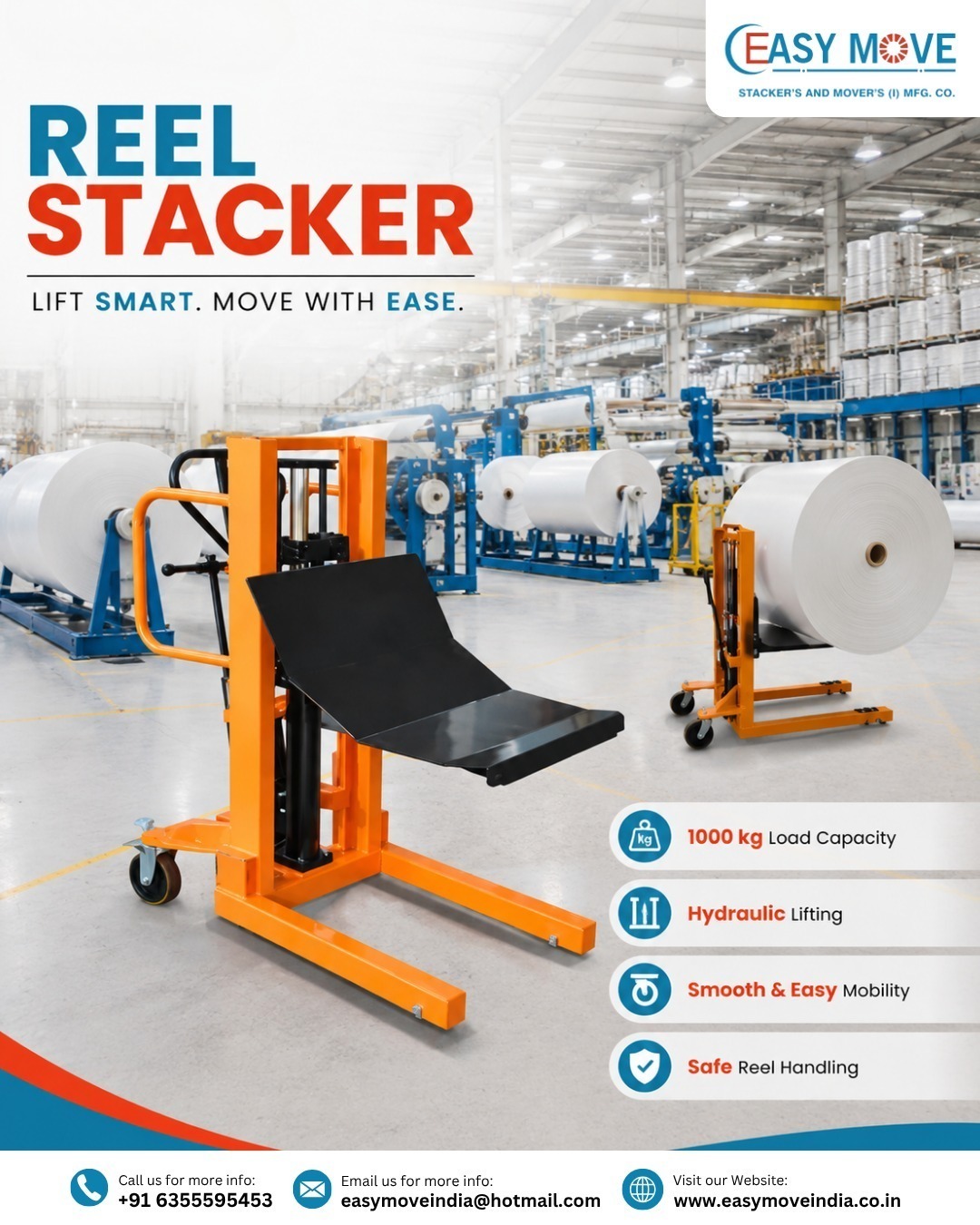
A reel stacker is a material-handling machine designed to lift, transport, position, and stack reels or rolls of material safely and efficiently. Depending on the model, it may use a manual, hydraulic, or electric lifting mechanism to handle reels of different sizes and weights.
Reel stackers are widely used in industries that move large rolls of paper, plastic film, foil, fabric, and other roll-based materials between storage areas, production lines, and processing machines.
Unlike a general-purpose stacker, a reel handling stacker can use specialised attachments to accommodate the dimensions, shape, core, and weight of the reels it handles.
How Does a Reel Stacker Work?
A reel stacker uses a lifting mechanism to raise and lower reels while allowing operators to move them to the required location.
The typical working process involves the following steps:
Reel positioning: The operator aligns the stacker with the reel.
Lifting: The lifting mechanism raises the reel using a suitable attachment.
Transportation: The operator carefully moves the reel to the required storage area or production station.
Placement and stacking: The operator lowers the reel into its designated position under controlled conditions.
The operating method depends on the equipment design, rated load capacity, reel dimensions, and workplace requirements.
What Are the Main Benefits of Using a Reel Stacker?
Improved Material Handling Efficiency
A reel stacker simplifies moving heavy rolls and reels within industrial facilities. It can reduce the time needed to transfer materials between workstations, storage areas, and production equipment, helping maintain a smoother workflow.
Enhanced Workplace Safety
Manually handling heavy reels increases the risk of back strain, crushed fingers, and dropped loads. A suitable reel stacker reduces manual lifting and helps operators control materials during transport and positioning.
Operators should always follow the machine’s load limits, operating instructions, and workplace safety procedures.
Reduced Product Damage
Improper handling can damage paper rolls, plastic films, fabrics, and similar materials. Dents, scratches, crushed edges, and surface defects can affect product quality.
A properly selected reel handling stacker supports controlled movement and positioning, helping reduce avoidable material damage.
Better Space Utilisation
A reel stacker helps businesses organise reels in designated storage areas and stack compatible loads when permitted by the equipment design and storage arrangement.
Improved storage organisation can reduce clutter, increase accessibility, and make better use of available warehouse and factory space.
Increased Productivity
By making reel movement more consistent and less physically demanding, a reel stacker can help operators complete routine handling tasks efficiently. This can reduce material-transfer delays and support uninterrupted production.
Reduced Manual Handling Effort
A suitable reel stacking solution reduces dependence on manual lifting and repositioning. This helps employees handle materials with greater control while letting them focus on other essential production activities.
Which Industries Use Reel Stackers?
Reel stackers suit several industries that manufacture, process, transport, or store roll-based materials.
Paper and pulp industry: Handling paper rolls and reels in mills and processing facilities.
Printing industry: Moving paper rolls used in printing and publishing operations.
Packaging industry: Handling plastic films, laminates, and packaging material reels.
Textile industry: Moving fabric rolls and other roll-based materials.
Plastic manufacturing: Handling film rolls and compatible plastic materials.
Cable and wire industry: Moving cable reels when the stacker is specifically designed for their dimensions and load requirements.
Selecting the right reel stacker depends on the material type, reel size, weight, operating environment, and intended application.
How to Choose the Right Reel Stacker for Your Business
Before purchasing a reel stacker, evaluate these factors to ensure the equipment meets your material-handling requirements.
Load Capacity
Determine the maximum weight of the reels you need to lift. Select a stacker with a rated load capacity suitable for your application and operating conditions.
Reel Size and Dimensions
Check the reel diameter, width, core size, and overall shape. These measurements help you choose the right attachment and handling method.
Lifting Height
Identify the maximum height required to place reels on storage racks, production machines, or designated storage positions.
Manual, Hydraulic, or Electric Operation
Choose the operating mechanism based on frequency of use, load requirements, workspace, budget, and desired automation level.
Maneuverability
For facilities with narrow aisles or limited floor space, a compact reel stacker with suitable turning capabilities can improve accessibility and movement.
Safety Features
Evaluate the braking system, machine stability, load support, lifting controls, and other safety features relevant to the equipment design.
Maintenance and After-Sales Support
Access to maintenance services, spare parts, and technical support can reduce downtime and support long-term performance.
Why Choose Easy Move for Reel Stacker Requirements?
Easy Move focuses on material handling solutions that help businesses improve the movement, positioning, and storage of industrial materials.
When evaluating a reel stacker for your facility, consider the following requirements:
Suitability for your reel dimensions and load capacity.
Appropriate lifting height and positioning requirements.
Ease of operation within your available workspace.
Safety features suitable for the intended application.
Maintenance requirements and long-term operating costs.
Technical guidance to help identify a suitable material handling solution.
If you are searching for a Reel Stacker Manufacturer in Ahmedabad, exploring a Reel Stacker Distributor in Gujarat, or comparing options from a Reel Stacker supplier in India, contact Easy Move to discuss your application and equipment requirements.
Note: Confirm machine specifications, available models, certifications, warranty, and service coverage directly with Easy Move before purchasing.
Why Is a Reel Stacker a Valuable Investment?
Investing in a reel stacker can improve material-handling efficiency, support safer working conditions, and reduce avoidable product damage.
The right equipment can help streamline everyday operations by reducing unnecessary material movement, improving storage organisation, and supporting more consistent handling procedures.
For businesses that regularly handle heavy reels, choosing equipment that matches reel dimensions, load requirements, lifting height, and the operating environment can significantly improve overall workflow efficiency.
Frequently Asked Questions About Reel Stackers
What is a reel stacker used for?
A reel stacker lifts, moves, positions, and stacks reels or rolls of materials such as paper, plastic film, fabric, foil, and other compatible industrial products.
What are the benefits of using a reel stacker?
The main benefits include improved material handling efficiency, reduced manual lifting, better load control, lower risk of material damage, and more organised storage.
Which industries commonly use reel stackers?
Reel stackers are commonly used in paper mills, printing facilities, packaging plants, textile manufacturing units, plastic processing facilities, and cable or wire manufacturing operations where compatible equipment is required.
Keywords