What Is a Double Parrot Beak Attachment and How Does It Improve Industrial Material Handling?
Industrial operations rely on specialised attachments to improve equipment functionality, simplify repetitive tasks, and support efficient material handling. The right attachment can improve workflow, maintain operational consistency, and help businesses use existing machinery more effectively.
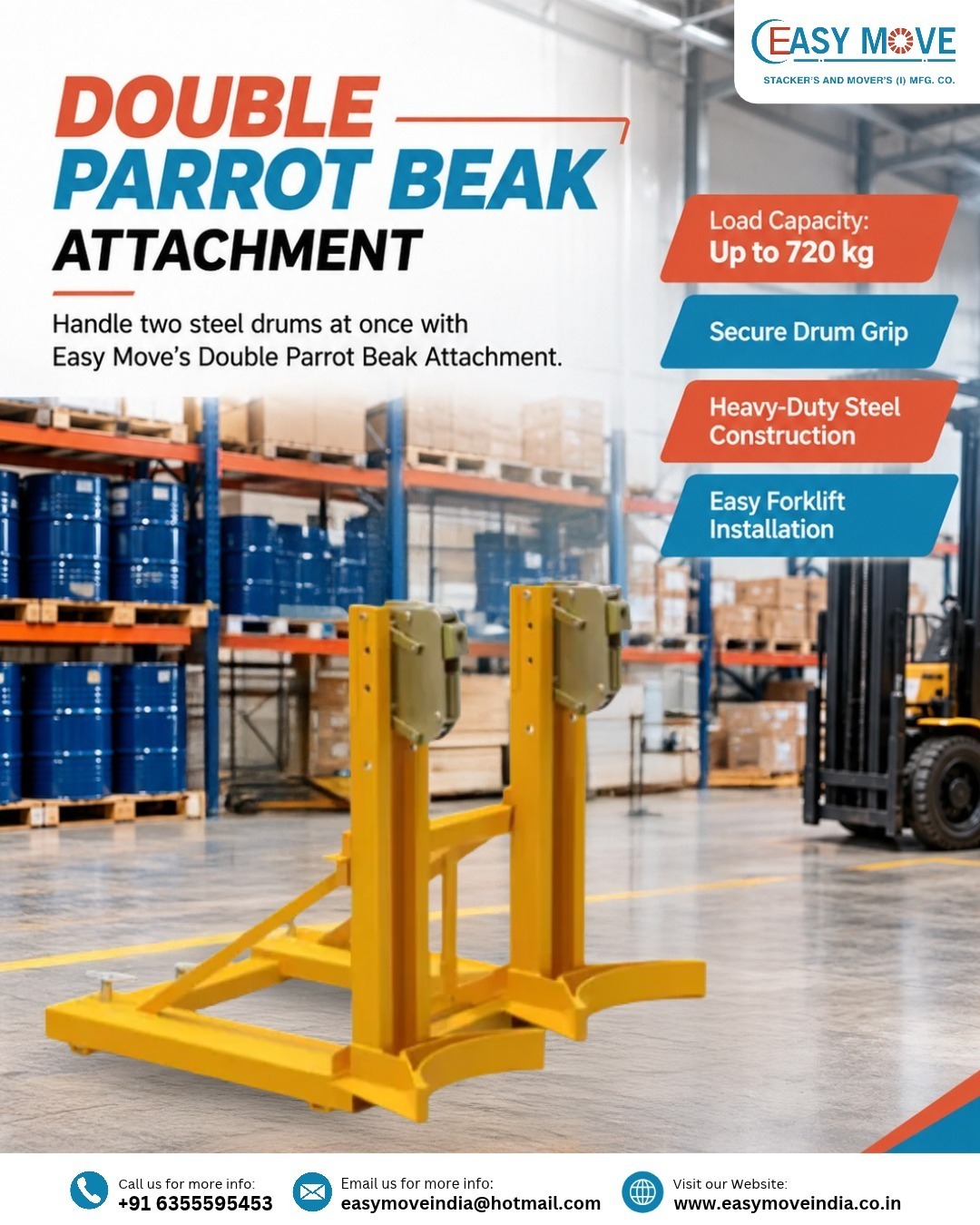
A Double Parrot Beak Attachment is a product-specific term that may describe a mechanical attachment featuring two beak-shaped gripping or engaging sections. Its exact design, purpose, and compatibility depend on the manufacturer’s specifications and the machinery it is intended for.
In material handling environments, specialised attachments can help improve the movement, positioning, and handling of specific loads. However, buyers must confirm the correct application in the product’s technical documentation.
Contact EasyMove for material handling equipment inquiries and product information. Buyers should confirm the exact attachment design, intended use, load capacity, and compatibility before purchasing.
This article explains the potential function of a double parrot beak attachment, key selection considerations, and its role in industrial material handling and forklift attachments.
What Is a Double Parrot Beak Attachment?
A Double Parrot Beak Attachment is a specialised attachment name that suggests a configuration with two beak-shaped sections. Depending on its engineering design, these sections may engage, grip, guide, or position a particular object or component.
The name alone doesn't indicate its function. The attachment could be designed for a specific machine or process, and its intended use must be verified through the manufacturer’s product catalogue, technical drawings, or operating instructions.
Before purchasing, industrial buyers should establish:
* The machine or equipment the attachment is designed for.
* The intended material or object being handled.
* The mounting arrangement and connection dimensions.
* The rated operating capacity and limitations.
* The required maintenance and safety procedures.
These checks help ensure that the selected attachment meets the actual requirements of the application.
How Does a Double Parrot Beak Attachment Work?
The working principle depends on the attachment’s construction and the machinery it is installed on. A typical mechanical attachment may interact with a workpiece through its two shaped sections.
1. Attachment Installation
Fit the attachment to compatible machinery using the specified mounting points, fasteners, or connection mechanism.
Correct installation helps maintain alignment and reduces the risk of unwanted movement during operation.
2. Material Engagement
The two shaped sections engage with the intended component or material. Their geometry, spacing, and surface characteristics determine how the material is contacted or positioned.
3. Mechanical Movement
The attachment operates through the machine’s existing mechanism or a dedicated actuator, depending on its design. Movement must remain within the manufacturer’s specified operating limits.
4. Handling or Positioning
The attachment performs its intended task, which may involve gripping, guiding, positioning, or another application-specific function.
5. Release and Reset
After the operation is complete, the attachment releases the material or returns to its starting position according to the machine’s operating sequence.
Important: These are general mechanical principles, not verified operating instructions for a particular Double Parrot Beak Attachment. Consult the actual product documentation before installation or use.
What Are the Important Features of an Industrial Attachment?
When evaluating a specialised attachment, consider the characteristics that influence its compatibility, reliability, and performance.
1. Structural Design
The attachment's shape, dimensions, and construction determine how it interacts with the intended material or machine.
2. Material and Durability
Material selection should suit the operating environment, expected mechanical loads, wear exposure, and applicable corrosion requirements.
3. Machine Compatibility
The attachment must fit the specified equipment and mounting arrangement. Incorrect dimensions or connections may affect operation and safety.
4. Operating Capacity
Verify the manufacturer’s rated capacity, permitted operating forces, and any restrictions on the materials or objects being handled.
5. Maintenance Requirements
Follow the manufacturer's instructions for inspection intervals, wear checks, lubrication requirements, and replacement procedures.
6. Operator Safety
Use the attachment only for its intended purpose, with appropriate guarding, operating procedures, and safety measures.
What Is Steel Drum Handling Equipment?
Steel Drum Handling Equipment refers to equipment designed to move, lift, transport, or position steel drums safely and efficiently.
Depending on the application, this equipment may include forklift-mounted drum handlers, drum lifters, drum grabs, drum rotators, and other purpose-built handling systems.
When selecting steel drum handling equipment, consider the following factors.
Drum Size and Weight
Confirm the drum dimensions, loaded weight, and compatibility with the handling mechanism.
Drum Condition and Design
The drum’s material, rim or chime construction, condition, and contents can affect which handling method is appropriate.
Forklift Compatibility
For forklift-mounted equipment, verify the attachment interface, forklift capacity, load centre, and any manufacturer-specific restrictions.
Retention and Stability
The handling system must securely retain the drum during lifting and movement in accordance with the equipment’s operating instructions.
Operating Environment
Consider indoor or outdoor use, floor conditions, available space, and how often the drum moves.
Selecting the right equipment supports safer material movement and more efficient warehouse or industrial operations.
How Do Forklift Attachments Improve Material Handling Efficiency?
Forklift Attachments India is a relevant search term for businesses seeking specialised equipment to extend forklift functionality. Different attachments are designed for different loads and handling tasks.
Common forklift attachment categories include:
· Drum Handlers: Designed to handle compatible drums.
· Fork Extensions: Increase effective fork length when permitted by the forklift and attachment specifications.
· Side Shifters: Allow lateral positioning of a compatible load.
· Rotators: Rotate compatible loads for specific handling operations.
· Clamps: Grip designated load types when the clamp is engineered and rated for the application.
· Other Specialised Attachments: Designed for particular materials, containers, or industrial processes.
The correct attachment depends on the load, handling requirements, forklift model, rated capacity, and operating environment.
Before installation, confirm that the attachment is approved for the forklift and that the revised capacity and load centre remain within the manufacturer’s limits.
What Are the Benefits of Choosing the Right Material Handling Equipment?
Suitable Material Handling Equipment can support efficient operations across warehouses, manufacturing plants, distribution centres, and industrial facilities.
Improved Workflow
Purpose-designed equipment can simplify repetitive handling tasks and help maintain a consistent workflow.
Better Load Control
A compatible attachment helps operators handle the intended load according to the equipment’s design and rated capacity.
Reduced Manual Handling
Mechanised handling can reduce the need for certain manual lifting and positioning tasks, provided operators follow safe operating procedures.
Efficient Space Utilisation
Suitable handling equipment can help move materials through designated storage and production areas.
Equipment Compatibility
Selecting an attachment designed specifically for the machine and load supports reliable operation.
Maintenance Planning
Regular inspections and appropriate maintenance can help identify wear, damage, and other issues before they affect performance.
Actual benefits depend on the equipment design, operating conditions, training, and maintenance practices.
How to Choose the Right Attachment for Your Business
Before purchasing a Double Parrot Beak Attachment or another industrial attachment, use the following checklist.
1. Identify the application: Define exactly what needs to be gripped, lifted, moved, or positioned.
2. Confirm the product identity: Obtain the manufacturer’s catalogue reference, technical drawing, or model number.
3. Check machine compatibility: Verify the equipment model, mounting arrangement, and connection dimensions.
4. Review capacity requirements: Confirm the rated capacity and all applicable operating limitations.
5. Assess material suitability: Consider dimensions, weight, surface characteristics, and operating environment.
6. Review safety requirements: Check retention mechanisms, guarding, operating instructions, and inspection procedures.
7. Confirm supply details: Request product availability, technical specifications, warranty terms, and delivery information.
These steps help buyers avoid selecting equipment based on a product name alone.
Why Contact EasyMove for Material Handling Equipment?
Choosing suitable equipment requires a clear understanding of the application, load requirements, machine compatibility, and safety considerations.
Contact EasyMove to discuss material handling equipment requirements and request product information. Before purchasing a Double Parrot Beak Attachment, buyers should confirm its exact function, compatible machinery, technical specifications, and intended application.
For businesses evaluating forklift attachments or steel drum handling equipment, verify rated capacity, mounting compatibility, operating limitations, and applicable safety documentation.
Contact EasyMove to discuss your requirements and identify the appropriate equipment for your material handling operation.
Frequently Asked Questions (FAQs)
1. What is a Double Parrot Beak Attachment?
It is a product-specific attachment name that suggests two beak-shaped sections. Confirm its precise function and intended application in the manufacturer’s technical documentation.
2. What is a forklift drum handler?
A forklift drum handler is an attachment designed to lift, move, or position compatible drums using a forklift. Check its capacity and compatibility before use.
3. What is steel drum handling equipment used for?
It moves, lifts, transports, and positions compatible steel drums in warehouses, manufacturing facilities, and industrial environments.
Keywords