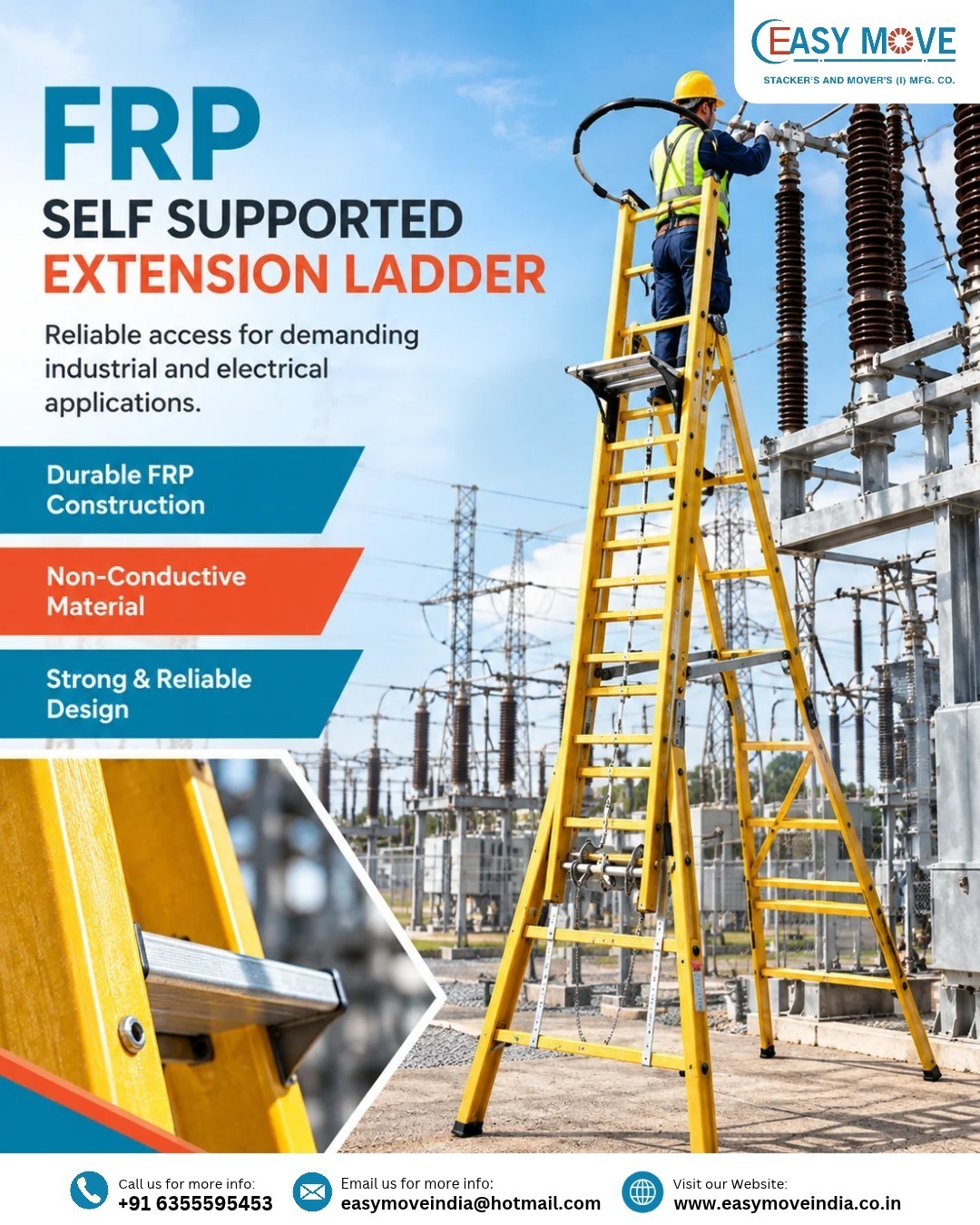
Why Is an FRP Extension Ladder a Smart Choice for Industrial and Electrical Work?
Working at height is common in electrical maintenance, construction, manufacturing, and infrastructure operations. Choosing the right ladder is essential for accessing elevated areas while supporting workplace safety and operational efficiency.
An FRP Extension Ladder is made from fiberglass-reinforced plastic (FRP), a material known for its electrical insulating properties under suitable conditions. Unlike conventional metal ladders, fiberglass ladders are preferred for many electrical and industrial applications that require non-conductive materials.
Easy Move offers a practical solution for professionals seeking height-access equipment. Understanding its features, applications, and selection criteria helps businesses choose the right ladder for their work environment.
1. What Is an FRP Extension Ladder?
An FRP Extension Ladder is an extendable ladder made from fiberglass-reinforced plastic. Its adjustable structure lets users extend the ladder to different heights based on the task and the manufacturer’s operating instructions.
These ladders are commonly used for:
· Electrical installation and maintenance.
· Industrial facility maintenance.
· Construction and infrastructure work.
· Utility and streetlight maintenance.
· Telecommunications equipment access.
· Building and warehouse maintenance.
The fiberglass construction makes this type of ladder especially suitable for applications where electrical insulation is critical.
2. Why Is a Fiberglass Ladder Preferred for Electrical Work?
One of the main reasons professionals choose a Fiberglass Ladder is its electrical insulating properties.
Unlike aluminum and other metal ladders, FRP materials are non-conductive under appropriate conditions. This makes them a preferred material choice for electricians and electrical maintenance teams.
Important considerations include:
· Non-Conductive Material: Fiberglass does not conduct electricity like metal under suitable conditions.
· Electrical Maintenance Applications: Suitable FRP ladders may be selected for certain electrical work environments.
· Alternative to Metal Ladders: Provides a non-metallic option for applications where conductive ladder materials are unsuitable.
Important safety note: An FRP ladder does not guarantee protection against electric shock. Its insulating performance depends on its condition, moisture, contamination, damage, and applicable testing. Always follow electrical isolation procedures, maintain safe distances, and use appropriate personal protective equipment.
3. What Makes an FRP Extension Ladder Suitable for Industrial Use?
Industrial environments require equipment that can handle regular use and demanding working conditions.
A Heavy Duty FRP Extension Ladder can offer several practical advantages, depending on its design and specifications.
· Fiberglass Construction: Provides a non-metallic ladder structure.
· Corrosion Resistance: FRP materials can resist corrosion in suitable environments.
· Adjustable Height: Supports access to different elevated working areas.
· Professional Applications: Suitable models are available for industrial maintenance requirements.
· Practical Handling: Weight and handling characteristics depend on ladder size and construction.
Regular inspection and proper storage are essential to maintain ladder condition and usability.
4. How Does an Extension Ladder Support Different Working Heights?
An extension ladder features a sliding or extending section that lets you adjust its length. This design helps professionals access elevated locations without relying on multiple fixed-length ladders.
A suitable Industrial FRP Extension Ladder can be considered for:
· Electrical installation and maintenance.
· Streetlight and utility maintenance.
· Industrial equipment inspection.
· Building and infrastructure maintenance.
· Warehouse facility maintenance.
· Telecommunications and cable installation.
Before use, check the ladder’s extended length, locking mechanism, placement requirements, and manufacturer’s instructions.
5. What Are the Main Applications of FRP Extension Ladders?
A non-conductive ladder is useful in several professional environments where electrical insulation is a key equipment-selection consideration.
Electrical Industry
Electricians and maintenance professionals may use suitable fiberglass ladders for electrical installation and maintenance tasks, as required by workplace safety standards.
Manufacturing Industry
Industrial maintenance teams use ladders to access elevated machinery, equipment, and facility components.
Construction Industry
FRP extension ladders can support selected building maintenance and construction-related access requirements.
Power and Utility Sector
Suitable ladder models can support maintenance activities involving utility infrastructure and elevated installations.
Telecommunications Industry
Technicians may use extension ladders to access communication equipment, cable installations, and related infrastructure.
6. What Should You Check Before Buying an FRP Extension Ladder?
Selecting the right FRP Extension Ladder requires careful consideration of the working environment and technical specifications.
Here are important factors to evaluate:
· Ladder Height: Check both closed and fully extended lengths to match the required working height.
· Load Capacity: Verify the manufacturer’s rated load capacity and duty rating.
· FRP Material Quality: Review the construction quality and product specifications.
· Locking Mechanism: Ensure extension locks operate correctly and securely.
· Rung Design: Check rung strength, spacing, and slip-resistant features.
· Safety Compliance: Ask for applicable testing reports, certification, and compliance documents.
· Electrical Suitability: Verify whether the ladder has been tested and rated for the intended electrical application.
· Maintenance Requirements: Understand inspection, cleaning, storage, and maintenance instructions.
Comparing these specifications helps businesses select a ladder that suits their operational and safety requirements.
7. How to Maintain an FRP Extension Ladder?
Proper maintenance helps preserve ladder condition and supports safer operation.
Follow these general maintenance practices:
1. Inspect ladder rails, rungs, and joints before use.
2. Check extension locks and moving components.
3. Look for cracks, delamination, damaged sections, or other visible defects.
4. Keep the ladder clean and free from conductive contamination.
5. Store it in a dry, protected location as directed by the manufacturer.
6. Remove damaged ladders from service until properly assessed.
7. Follow the manufacturer’s inspection and maintenance schedule.
Why Is an FRP Extension Ladder a Smart Choice for Industrial and Electrical Work?
Working at height is common in electrical maintenance, construction, manufacturing, and infrastructure operations. Choosing the right ladder is essential for accessing elevated areas while supporting workplace safety and operational efficiency.
An FRP Extension Ladder is manufactured using Fiberglass Reinforced Plastic (FRP), a material known for its electrical insulating properties under suitable conditions. Unlike conventional metal ladders, fiberglass ladders are preferred for many electrical and industrial applications that require non-conductive materials.
Easy Move offers a practical solution for professionals seeking height-access equipment. Understanding its features, applications, and selection criteria helps businesses choose the right ladder for their work environment.
1. What Is an FRP Extension Ladder?
An FRP Extension Ladder is an extendable ladder made from fiberglass-reinforced plastic. Its adjustable structure lets users extend the ladder to different heights based on the task and the manufacturer’s operating instructions.
These ladders are commonly used for:
· Electrical installation and maintenance.
· Industrial facility maintenance.
· Construction and infrastructure work.
· Utility and streetlight maintenance.
· Telecommunications equipment access.
· Building and warehouse maintenance.
The fiberglass construction makes this type of ladder especially suitable for applications where electrical insulation is critical.
2. Why Is a Fiberglass Ladder Preferred for Electrical Work?
One of the main reasons professionals choose a Fiberglass Ladder is its electrical insulating properties.
Unlike aluminum and other metal ladders, FRP materials are non-conductive under appropriate conditions. This makes them a preferred material choice for electricians and electrical maintenance teams.
Important considerations include:
· Non-Conductive Material: Fiberglass does not conduct electricity like metal under suitable conditions.
· Electrical Maintenance Applications: Suitable FRP ladders may be selected for certain electrical work environments.
· Alternative to Metal Ladders: Provides a non-metallic option for applications where conductive ladder materials are unsuitable.
Important safety note: An FRP ladder does not guarantee protection against electric shock. Its insulating performance depends on its condition, moisture, contamination, damage, and applicable testing. Always follow electrical isolation procedures, maintain safe distances, and use appropriate personal protective equipment.
3. What Makes an FRP Extension Ladder Suitable for Industrial Use?
Industrial environments require equipment that can handle regular use and demanding working conditions.
A Heavy Duty FRP Extension Ladder can offer several practical advantages, depending on its design and specifications.
· Fiberglass Construction: Provides a non-metallic ladder structure.
· Corrosion Resistance: FRP materials can resist corrosion in suitable environments.
· Adjustable Height: Supports access to different elevated working areas.
· Professional Applications: Suitable models are available for industrial maintenance requirements.
· Practical Handling: Weight and handling characteristics depend on ladder size and construction.
Regular inspection and proper storage are essential to maintain ladder condition and usability.
4. How Does an Extension Ladder Support Different Working Heights?
An extension ladder features a sliding or extending section that lets you adjust its length. This design helps professionals access elevated locations without relying on multiple fixed-length ladders.
A suitable Industrial FRP Extension Ladder can be considered for:
· Electrical installation and maintenance.
· Streetlight and utility maintenance.
· Industrial equipment inspection.
· Building and infrastructure maintenance.
· Warehouse facility maintenance.
· Telecommunications and cable installation.
Before use, check the ladder’s extended length, locking mechanism, placement requirements, and manufacturer’s instructions.
5. What Are the Main Applications of FRP Extension Ladders?
A non-conductive ladder is useful in several professional environments where electrical insulation properties are an important equipment-selection consideration.
Electrical Industry
Electricians and maintenance professionals may use suitable fiberglass ladders for electrical installation and maintenance tasks, as required by workplace safety standards.
Manufacturing Industry
Industrial maintenance teams use ladders to access elevated machinery, equipment, and facility components.
Construction Industry
FRP extension ladders can support selected building maintenance and construction-related access requirements.
Power and Utility Sector
Suitable ladder models can support maintenance activities involving utility infrastructure and elevated installations.
Telecommunications Industry
Technicians may use extension ladders to access communication equipment, cable installations, and related infrastructure.
6. What Should You Check Before Buying an FRP Extension Ladder?
Selecting the right FRP Extension Ladder requires careful consideration of the working environment and technical specifications.
Here are important factors to evaluate:
· Ladder Height: Check both closed and fully extended lengths to match the required working height.
· Load Capacity: Verify the manufacturer’s rated load capacity and duty rating.
· FRP Material Quality: Review the construction quality and product specifications.
· Locking Mechanism: Ensure extension locks operate correctly and securely.
· Rung Design: Check rung strength, spacing, and slip-resistant features.
· Safety Compliance: Ask for applicable testing reports, certification, and compliance documents.
· Electrical Suitability: Verify whether the ladder has been tested and rated for the intended electrical application.
· Maintenance Requirements: Understand inspection, cleaning, storage, and maintenance instructions.
Comparing these specifications helps businesses select a ladder that suits their operational and safety requirements.
7. How to Maintain an FRP Extension Ladder?
Proper maintenance helps preserve ladder condition and supports safer operation.
Follow these general maintenance practices:
1. Inspect ladder rails, rungs, and joints before use.
2. Check extension locks and moving components.
3. Look for cracks, delamination, damaged sections, or other visible defects.
4. Keep the ladder clean and free from conductive contamination.
5. Store it in a dry, protected location as directed by the manufacturer.
6. Remove damaged ladders from service until properly assessed.
7. Follow the manufacturer’s inspection and maintenance schedule.
Keywords